
Why Websites Don't Convert
Why Websites Don't Convert (Even Though They Look Great)
If you’ve ever wondered why websites don’t convert, you’re not alone. Many businesses invest thousands of dollars into beautiful designs only to discover that traffic comes—but leads and sales don’t.
The reality is that conversion depends on more than just visual appeal. While design matters, what truly drives results are strategy, messaging and user experience. Without those 3 elements, even attractive websites struggle to turn visitors into customers.
Understanding why websites don’t convert can help you transform your website from a digital brochure into a powerful growth engine.
Here are the five reasons why your website isn’t converting:
1. Clear Messaging Is Often Missing
One of the biggest reasons why websites don’t convert is unclear messaging. There’s no direct connection between your copy and the user.
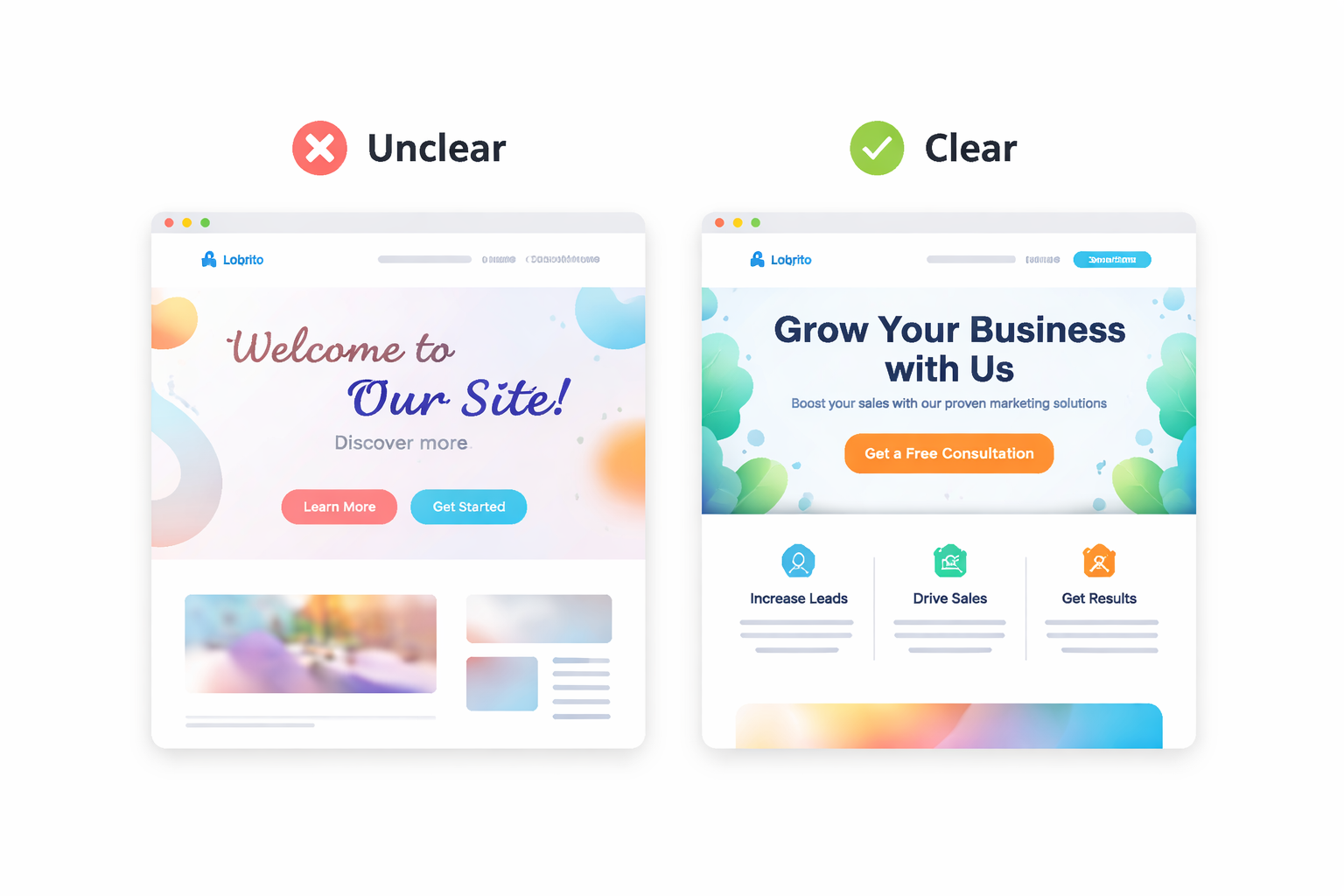
When visitors come across your website, within seconds they decide whether your business is relevant to them. If they can’t quickly understand what you do, who you help and how it benefits them, they will leave and go to your competition.
High-converting websites focus on branding and emphasize clarity.
Visitors should immediately see:
What service or offer you provide
What your ideal customer is
What result they can expect from you
According to research from Nielsen Norman Group, users form impressions within 20 seconds, which means clear messaging is crucial.
2. Poor User Experience
Another major factor behind no website conversions is poor User Experience (UX).
Even great copywriting won’t survive if users struggle to navigate your website. Believe it or not, frustrated experiences can leave a bad impression for long periods of time.
Common UX problems include:
Slow loading pages
Confusing navigation
Too many distractions on the page
Poor mobile design
Google continues to emphasize Core Web Vitals and user experience as ranking factors, which means UX now affects both SEO performance and conversions.
3. No Clear Call to Action
A surprising reason why websites don’t convert is the absence of the next step. Many websites assume visitors will figure out what to do next. However, online users need guidance and not everyone is technical savvy.
When designing the content layout for every page, make sure to answer the question:
“What should I do next?”
Effective ways to guide website visitors to take action:
Booking a consultation
Downloading a guide
Requesting a Quote
Signing up for a Newsletter
Research from HubSpot shows that landing pages with a single clear call-to-action perform significantly better than pages with multiple competing actions.
4. Lack of Trust Signals
One clear defining factor for why a potential customer may choose your business over others is how trustworthy you are and your credibility. Without credibility, there is no trust.
Before website visitors buy a service or offer, they look for proof.
High-converting websites usually have proof like:
Testimonials
Case Studies
Portfolio
Results or Statistics
Reviews
According to BrightLocal, 87% of consumers read online reviews before choosing a business.
Design alone cannot build trust. Proof does.
5. No Real Offer or Incentive
Finally, the last reason why websites don’t convert is the absence of a compelling offer.
Visitors rarely convert just because a website looks nice. They convert because they see value and a reason to act now.
Effective websites include incentives such as:
Free consultations
Helpful guides or downloads
Limited-time offers
Product demos
These offers move visitors from passive browsing to active engagement.
Conclusion: Conversion-Focused Websites
Now, we’ve taught you the first step towards fixing your website: understanding the problems you have. What you need to do next is actionable:
Craft a clear, compelling value proposition offer- answer visitors' questions and pain points.
Optimize technical design - user-friendly navigation and mobile experience.
Strong trust signals - offer proof with real testimonials, statistics and comments.
When these elements work together, your website becomes more than a design asset—it becomes a revenue-generating tool.
Because in today’s digital landscape, success isn’t about having the prettiest website.
It’s about having one that converts.


